Cupping therapy
A traditional treatment in which cups create suction on the skin and muscle, releasing tight muscles and improving blood flow in the treated area.

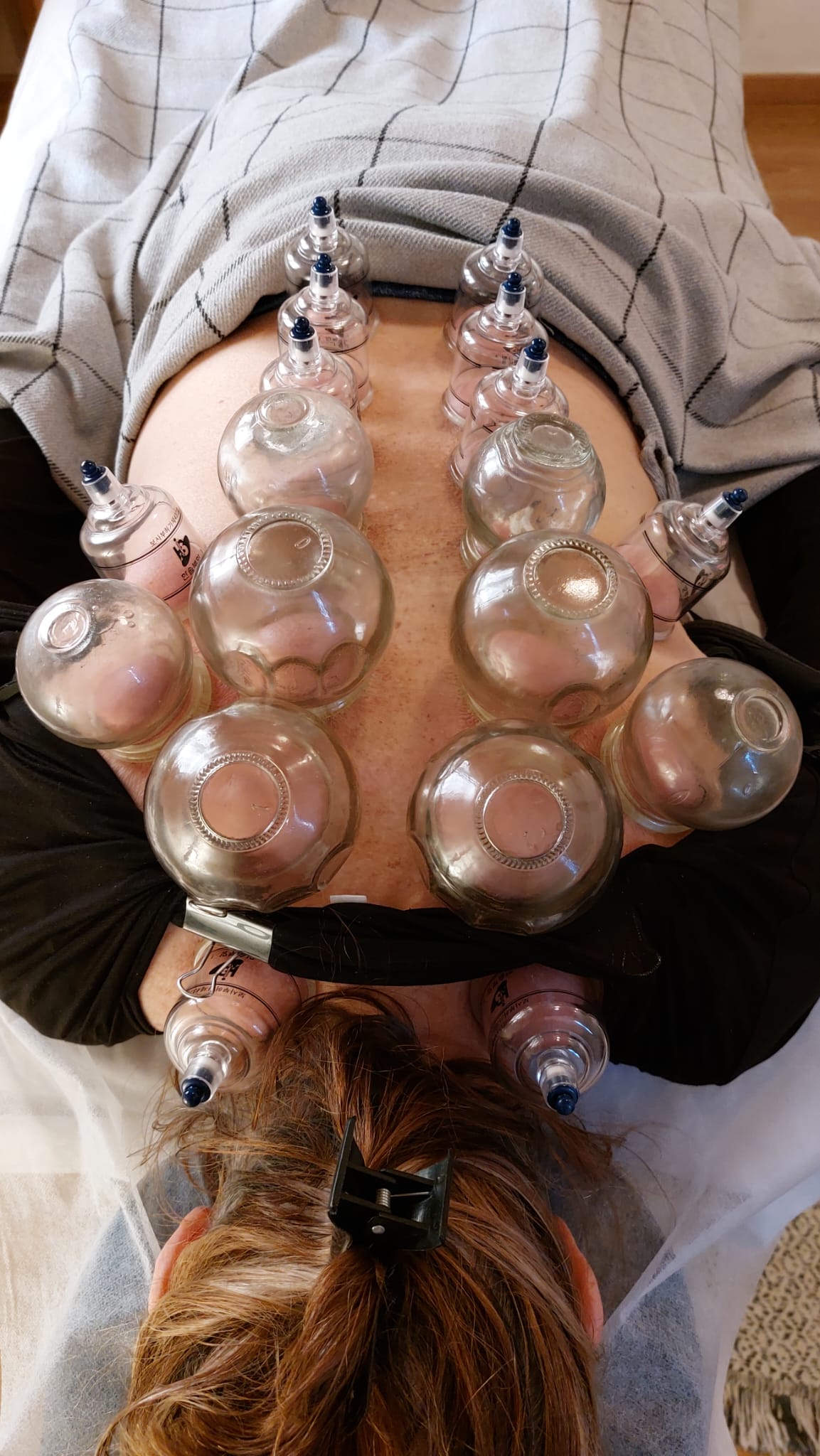
Cupping is one of the oldest and most well-known treatment methods in Chinese medicine. During treatment, cups — usually made of glass — are placed against the skin, creating a vacuum that draws the skin and muscle into the cup. This suction releases tight muscles, increases blood flow to the area, and helps ease pain and tension that has built up in the body.
In Chinese medicine, cupping is considered a “close cousin” of acupuncture: the cups are placed on the painful area, on acupuncture points, or along energy channels, depending on the diagnosis. In the clinic, cupping is often combined with acupuncture in the same session.
How is the treatment performed?
Before placing the cups, a short oil massage is usually performed, warming the area and preparing the tissue. In the traditional method, the vacuum is created by briefly heating the inside of the cup; the heat stays inside the cup and doesn’t touch the skin. In another method, the vacuum is created using a hand pump, which allows precise control over the intensity of the suction.
There are two main techniques: stationary cupping, where the cups remain on the skin for 5–15 minutes in a particular area, and moving cupping, where the cups are glided over oiled skin along the muscles and meridians — a kind of deep vacuum massage. The intensity of the suction is adjusted for each patient, and most people describe the sensation as pleasant and relaxing.
Who is cupping suited for?
- Tight muscles and pain – in the back, shoulders, shoulder blades and neck, as well as chronic back pain.
- Sports and recovery – releasing muscle load, improving blood flow and recovering from injuries.
- Colds and the respiratory system – at the onset of a cold, with coughing and breathing difficulties, as a supportive tool alongside asthma treatment.
- Tension and stiffness – a feeling of heaviness, buildup of cold in the body and mental stress expressed through the muscles.
- Menstrual pain – as a complementary tool for relieving menstrual pain and premenstrual syndrome.
The marks left after treatment
After a cupping treatment, round marks in a red-purple shade are usually left where the cups were placed. These are not burns: the suction draws blood and fluids to the surface, and the marks usually disappear within a few days to a week. Beyond that, the treatment has no significant side effects, and many patients report a feeling of lightness and release already by the end of the session.
After the treatment, it’s recommended to drink water, avoid exposure to cold and wind, and keep the area warm for a few hours.
Cupping and bloodletting
In cases of congestion, heat or local inflammation, cupping is sometimes combined with bloodletting — a gentle puncture of the skin before placing the cup. This combination is only performed after diagnosis and according to the patient’s condition. You can read more about it in two case stories from the clinic.
When is it not recommended?
Cupping is not placed on damaged skin, wounds, burns or varicose veins, and caution should be exercised during pregnancy, for patients taking blood-thinning medication, and in states of extreme weakness. Therefore, every treatment begins with a conversation and a diagnosis.
Shai Davids has been incorporating cupping into his treatments for more than 20 years. Schedule a treatment in Jerusalem or Ramat Gan.
Chinese medicine is a complementary treatment and does not replace medical diagnosis or treatment.
More treatments
at Machat Ruach
Treatment can combine several methods to create a precise, sensitive and comprehensive response.
Acupuncture
Precise treatment with fine, sterile needles, tailored to the diagnosis and to each person.
02Tuina
Chinese medical massage combining pressure, mobilization and stretching to release strain and pain.
03Shiatsu
Touch and pressure along the energy channels, for relaxation and balance of body and mind.
04Herbal Medicine
Chinese medicine formulas chosen according to the individual picture and the goals of treatment.