Acupuncture
The main treatment tool of Chinese medicine: fine, sterile, single-use needles placed at precise points on the body to relieve pain and restore the body’s balance.
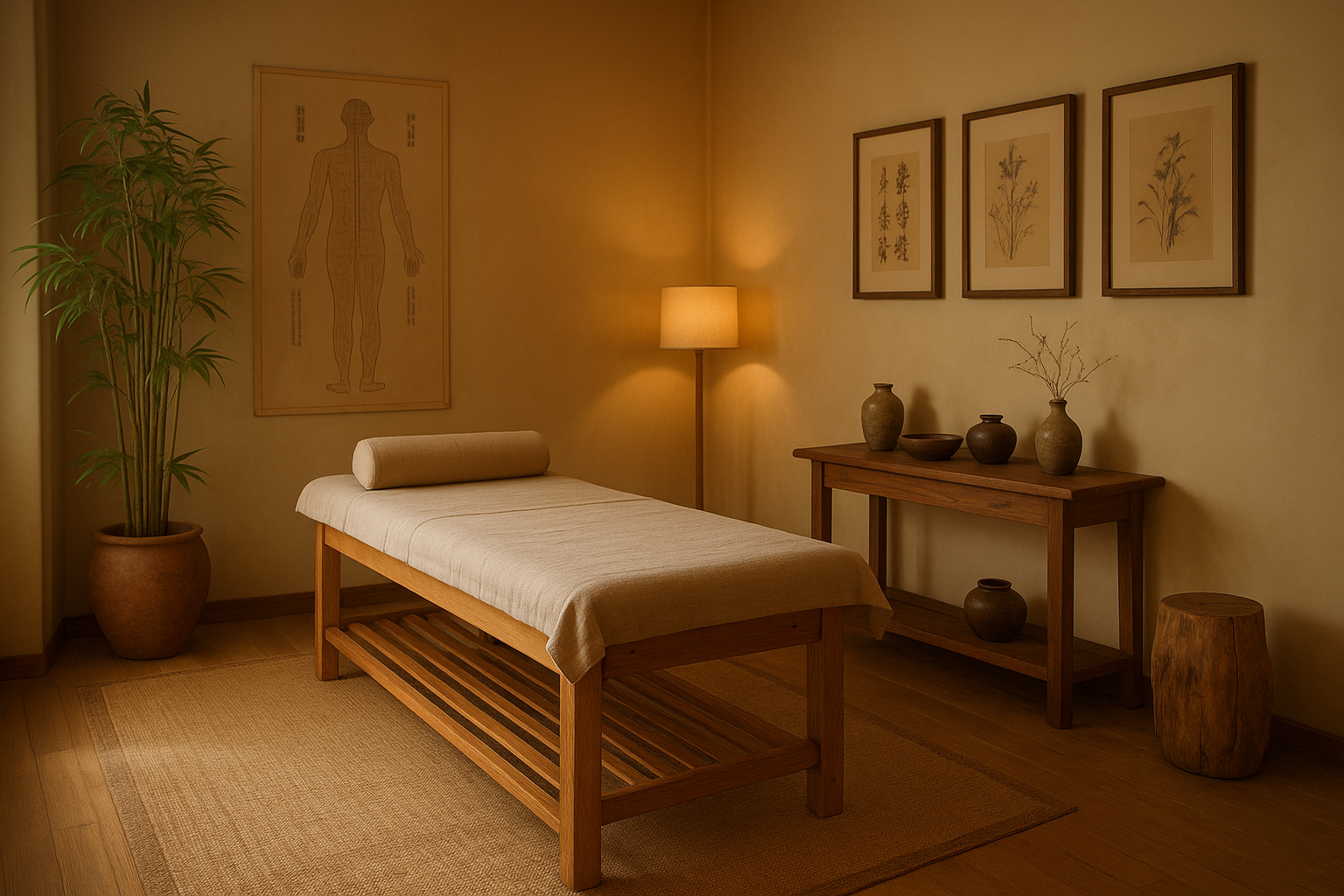
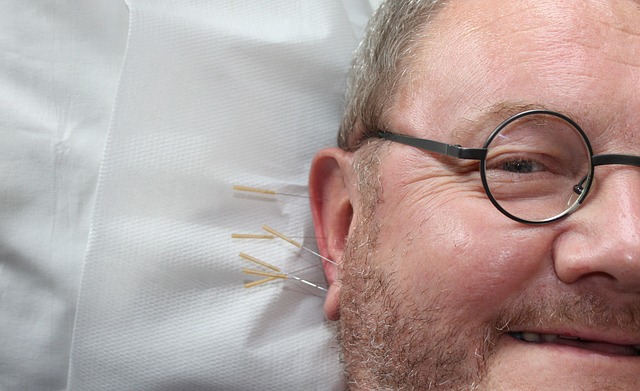
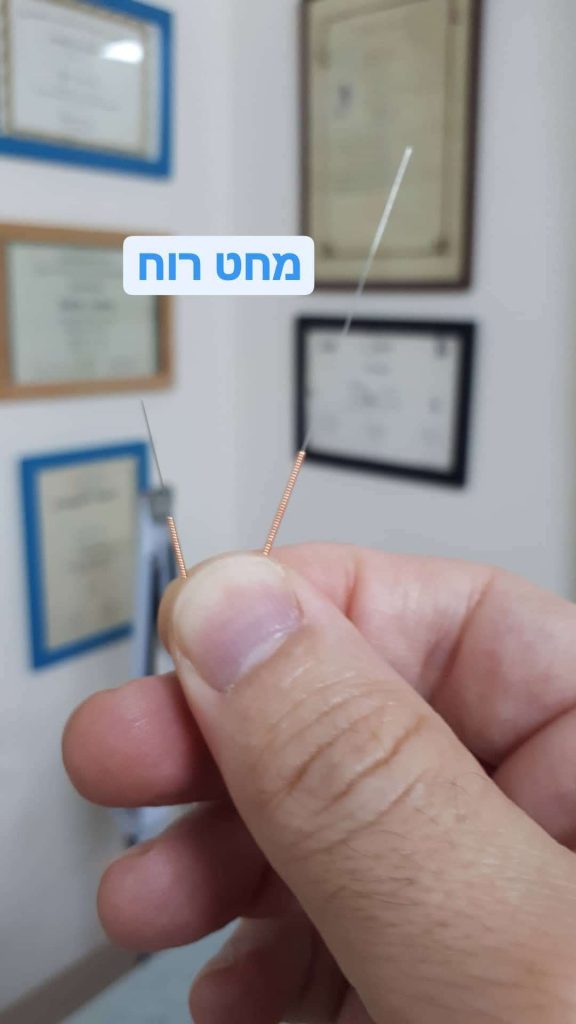
Chinese acupuncture is the central and oldest treatment tool in Chinese medicine. During treatment, very fine, sterile, single-use needles are inserted into precise points on the body. Stimulating these points affects the muscles, tendons, and ligaments in the treated area, as well as the function of internal organs, the nervous system, and mood.
At the Machat Ruach clinic, acupuncture is part of a complete treatment process: it’s built on a personal diagnosis, and combined as needed with Tuina massage, cupping, and Chinese herbal medicine.
How does Chinese acupuncture work?
According to Chinese medicine, life energy – Qi – flows through the body along channels called meridians, along which the acupuncture points are distributed. When the flow is blocked or out of balance, pain, tension, or various symptoms appear. An ancient Chinese saying describes it this way: “Where there is free flow, there is no pain; where there is pain, there is no free flow.”
Modern research explains some of acupuncture’s effects through the stimulation of nerves and muscle tissue, the release of endorphins, and improved blood flow. Many studies in Israel and around the world have examined the effect of acupuncture on pain, nausea, fertility, and other conditions – and Shai himself took part in an international study on male fertility.
What can Chinese acupuncture help with?
Chinese acupuncture is used as a complementary treatment for a wide range of conditions. Among the most common:
- Muscle and skeletal pain – back pain, neck and shoulder pain, knee pain, tennis elbow, sciatica, and tendonitis.
- Headaches – chronic headaches, migraines, and cervicogenic migraines.
- Women’s health and fertility – menstrual pain, irregular periods, PMS, menopause, and support for fertility processes.
- Stress, anxiety, and sleep – anxiety, ongoing fatigue, and insomnia.
- Digestive system – constipation, diarrhea, heartburn, and irritable bowel syndrome.
- Respiratory issues and allergies – asthma, seasonal allergies, sinusitis, and recurring colds.
- Additional conditions – facial paralysis (Bell’s palsy), skin problems, and smoking cessation.
What happens during treatment?
The first session opens with an in-depth conversation about the problem that brought you in, your health background, sleep, nutrition, and mood. Following this, a diagnosis is made according to Chinese medicine – examining the tongue and feeling the pulse at both wrists. Based on the diagnosis, the acupuncture points and the appropriate combination of tools are chosen.
Most patients feel, at most, a light tingling, heaviness, or a sensation of flow around the point. The needles usually stay in place for 20–30 minutes, and many patients use the time for deep relaxation. As needed, the same session may also combine cupping, Tuina massage, acupuncture with gentle electrical stimulation, or nutritional guidance.
How many treatments are needed?
The number of treatments varies from person to person, depending on the problem, how long it has existed, and the person’s general condition. In acute problems, such as pain that appeared recently, improvement is sometimes felt after just a few treatments. Chronic problems usually require a series of treatments, generally once a week at the start of the process. At the end of the first session, Shai recommends a tailored treatment plan.
Chinese acupuncture at Machat Ruach
Shai Davids has practiced Chinese medicine for more than 20 years, and has trained in a variety of acupuncture methods: traditional Chinese acupuncture (TCM), meridian theory acupuncture, and the technique of master Dr. Wei-Chieh Young, which uses a small number of needles and has an especially fast effect on pain. Treatments are given at clinics in Jerusalem and Ramat Gan.
Want to find out if Chinese acupuncture is right for you? Contact us to schedule a treatment or a short introductory call.
Chinese medicine is a complementary treatment and does not replace medical diagnosis or treatment.
More treatments
at Machat Ruach
Treatment can combine several methods to create a precise, sensitive and comprehensive response.
Tuina
Chinese medical massage combining pressure, mobilization and stretching to release strain and pain.
02Cupping
A traditional treatment tool for tight muscles, circulation and tension that has built up in the body.
03Shiatsu
Touch and pressure along the energy channels, for relaxation and balance of body and mind.
04Herbal Medicine
Chinese medicine formulas chosen according to the individual picture and the goals of treatment.