Acupuncture for Anxiety and Stress – How the Body Learned to Relax Again
He could not stop the thoughts. His mind worked non-stop, and his body felt tense all the time, until the strain never let up even for a moment. The story below describes how acupuncture helped one patient find a genuine way to relax, and what it can teach us about the connection between anxiety, stress […]

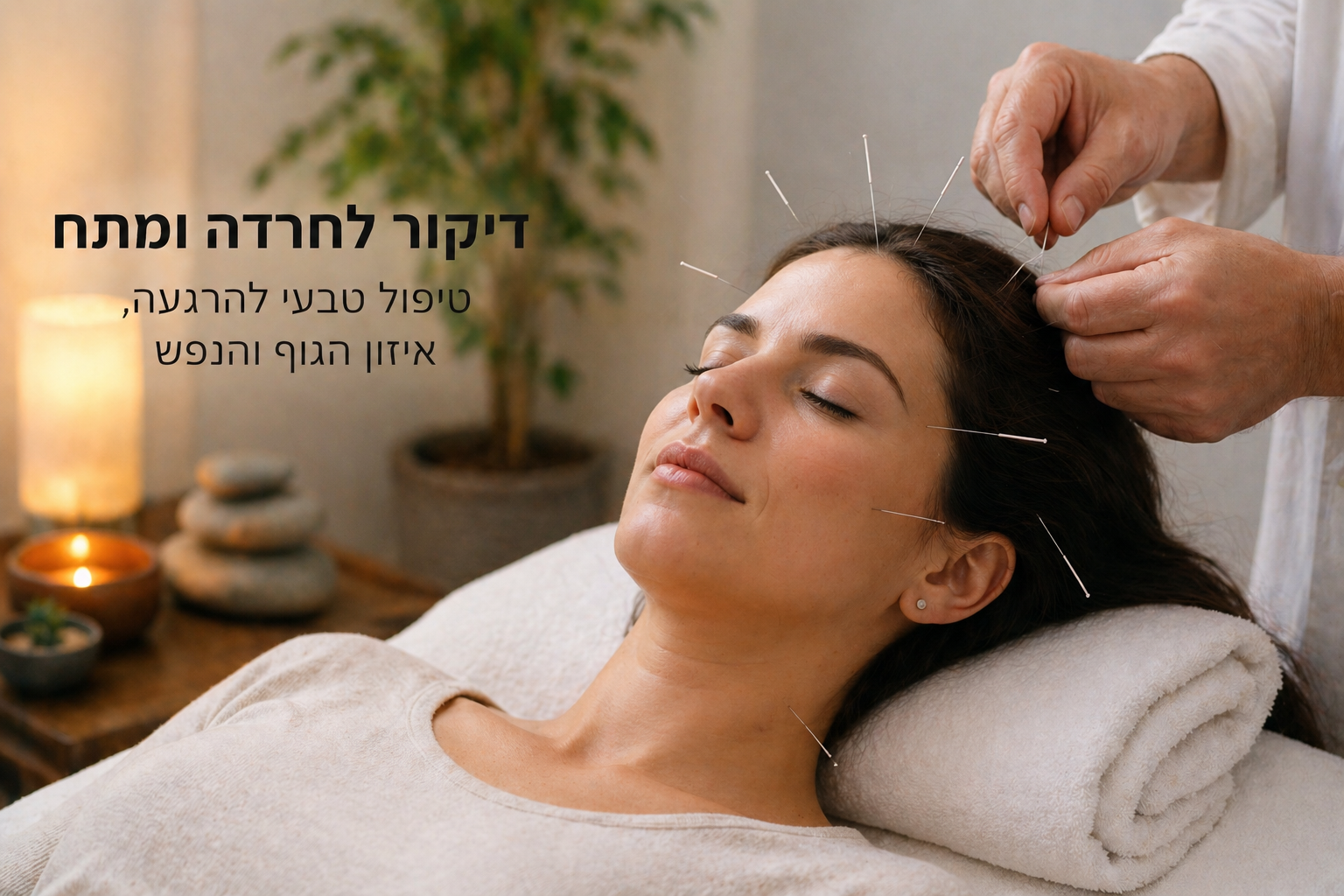
He could not stop the thoughts. His mind worked non-stop, and his body felt tense all the time, until the strain never let up even for a moment. The story below describes how acupuncture helped one patient find a genuine way to relax, and what it can teach us about the connection between anxiety, stress and the body.
When Stress Becomes Part of Life
He woke up feeling pressure already in the morning, and often struggled to fall asleep at night as well. The thoughts never stopped racing, and his body stayed under constant tension that never let him truly rest. Over time his quality of life suffered, and he realized he needed a real change rather than another temporary fix.
The Search for a Solution
He tried various relaxation techniques, and some of them did help, but only for a short while. The stress always came back, and gradually a deep frustration built up from the sense that nothing offered a real answer. At some point he decided to try acupuncture for anxiety and stress, to see whether a completely different approach could help him.
What Happened in the First Treatment
The first treatment was quiet and profound. The practitioner worked precisely and gently, and his body began to relax during the session itself, creating a sense of calm he had not known before. He left the treatment surprised by how quickly and clearly his body had responded.
The Change That Began to Happen
Gradually, over several sessions, the tension eased and his breathing became calmer. He found it much easier to fall asleep, and his body returned to a balance he had not felt in a long time. This change encouraged him to continue with regular treatments.
Returning to Control
Over time he felt like he was returning to himself, and his thoughts became quieter and more balanced. He discovered he could cope better with stressful situations, and his self-confidence gradually returned. Today he recommends that others facing a similar situation try this approach for themselves.
The Body-Mind Connection
Body and mind always work together, and mental stress directly affects the physical body. As a result, physical symptoms can appear, such as muscle pain, sleep problems or ongoing fatigue. Acupuncture helps balance the whole system, which is why it can bring about a deep change rather than only temporary relief.
In Chinese medicine, ongoing anxiety and stress are often linked to stagnation of liver Qi, which can show up as a feeling of tightness in the chest, irritability and difficulty relaxing. The heart meridian is also considered connected to the emotional world, and symptoms such as a racing heartbeat, insomnia or inner restlessness may point to an imbalance in this area. An accurate diagnosis of the individual pattern allows the practitioner to choose acupuncture points aimed precisely at the source of that patient’s imbalance, rather than a generic treatment of symptoms alone.
Treatment in Jerusalem and Ramat Gan
Shai Davids treats with a deep, precise approach, and many patients from Jerusalem come to him for treatment of anxiety and stress. The same treatment is also available at the clinic in Ramat Gan, and many patients report a significant change after just a few sessions. Various studies show that acupuncture helps reduce stress and improves sleep and calm, as described in the scientific information published by the U.S. National Center for Complementary and Integrative Health.
Book a Treatment
Shai Davids brings over twenty years of experience and tailors a personal treatment for each patient, resulting in a precise, deep response to every case. If you too are looking for genuine inner calm, now is the time to start: feel free to contact the clinic and schedule a first diagnostic session.