Ganglion Cysts and Other Cysts in Chinese Acupuncture
The Ganglion Is a very common type of cyst (defined as a sac filled with fluid). It is most often found in the wrist area, but it can also be found in other areas. In this case, the common term "ganglion," referring to ganglion cysts (bulges of the capsule surrounding a joint, or of the […]

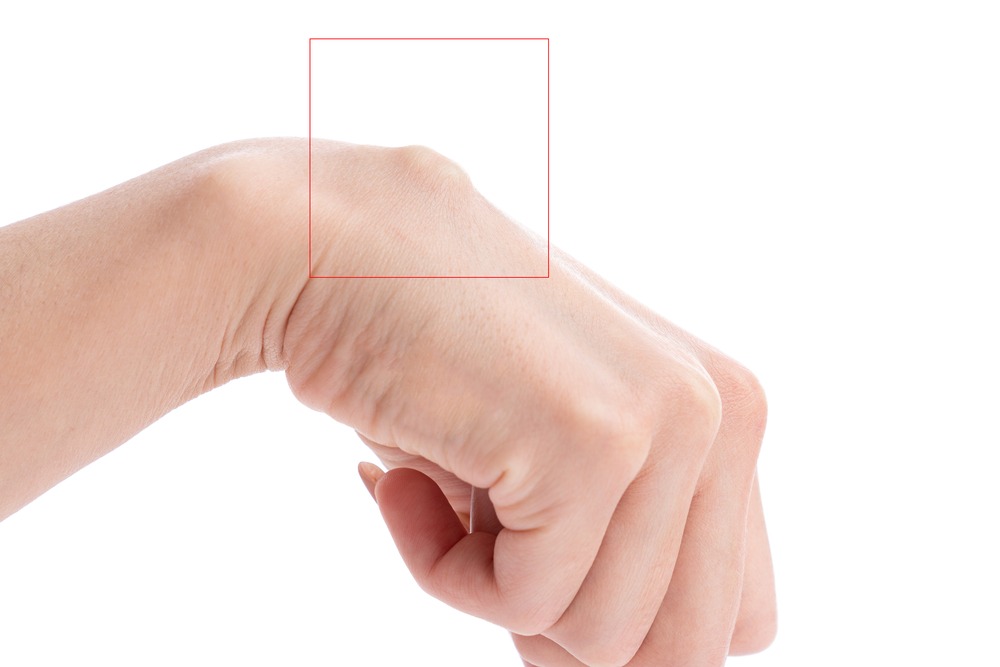
The Ganglion
Is a very common type of cyst (defined as a sac filled with fluid). It is most often found in the wrist area, but it can also be found in other areas. In this case, the common term “ganglion,” referring to ganglion cysts (bulges of the capsule surrounding a joint, or of the tissue surrounding tendons), is not medically accurate. This is because in medicine, the term ganglion refers to a cluster of nerve fibers or a cavity within a bone in the body, whereas our everyday “ganglion” is related to joints and tendon sheaths, and not necessarily to nerves.
Cyst
A cyst, in general, is made up of an outer shell (made of connective tissue), and a more delicate inner tissue – a gel-like fluid that is colorless and highly viscous.
What Causes Them to Form?
What causes a ganglion to appear, and cysts in general? Truthfully, conventional medicine offers no shortage of theories and hypotheses. Almost all of them ultimately come down to the same sentence: “We have no idea what caused this, but we need to treat it” (usually by means of a surgical procedure). On the other hand, the appearance of cysts aligns precisely with Chinese medicine, which holds that the flow of life energy (called “Qi”) that flows through the human body along the meridian channels has been disrupted, and that the cysts that appear are the result of a blockage in the meridians – a blockage that impairs the free, unobstructed flow of energy in the body.
How Are Cysts Treated?
Here too, opinions naturally differ between conventional medicine and Chinese medicine. In the case of a ganglion cyst, for example, a conventional doctor will refer you for treatment using the open method, in which a small incision is made in the skin, through which the ganglion is excised. After such surgery, the area is stitched, and for about 7 days you will need to keep your arm raised, in order to prevent the most common side effect of this type of surgery – edema. In a large proportion of cases, significant difficulty will be found in restoring the range of motion of the operated wrist joint for many months afterward. The second option offered by conventional medicine is the closed (arthroscopic) method, which is also performed under general anesthesia. In this method, however, the cyst is removed without creating an incision in the skin, but rather using instruments with optical fibers, through a tiny puncture made in the skin by the doctor during the procedure. It’s true that recovery with this method is faster, and often easier as well, but the procedures in both methods are performed under general anesthesia, with all the effects that come with it.
Chinese Acupuncture and Cysts
On the other hand, Chinese medicine offers treatment for ganglion cysts and other cysts by means of Chinese acupuncture. Chinese acupuncture treatments, when performed by the acupuncturist Shai Davids, address possible blockages in the free flow of Qi in the patient’s body, and as these blockages are removed, the cyst gradually dissolves, growing smaller from treatment to treatment, until it disappears completely. It must be said that this treatment approach sounds far more sensible than the surgical approaches, not to mention that it sounds much less painful than the historical approach that called for bursting the ganglion by striking it directly with a heavy object…
Shai Davids has been practicing since 2006 and has extensive experience in this field. Feel free to call!